


Ontological Manufacturing: Integrating Ontology, IoT, and Agentic AI for Intelligent Production Systems
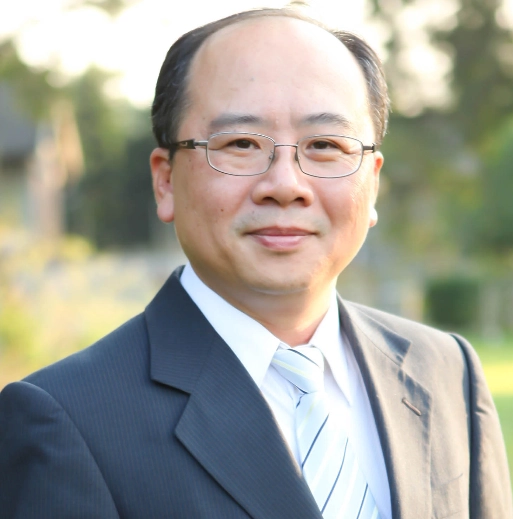
Chin-Yin Huang (Tunghai University)
Abstract
Modern manufacturing is entering a new stage in which automation and data connectivity are no longer sufficient. Intelligent production systems must understand context, interpret real-time events, reason about abnormalities, coordinate heterogeneous resources, and support adaptive decisions across cyber and physical environments. This keynote presents Ontological Manufacturing as a knowledge-centered paradigm that integrates ontology, IoT, and Agentic AI for the next generation of intelligent manufacturing systems. The key premise is that IoT signals become truly valuable only when they are connected to explicit manufacturing knowledge. Ontology provides a computable representation of machines, processes, resources, capabilities, constraints, events, failure modes, safety conditions, operational rules, and the relations and reasoning mechanisms that connect them. By grounding real-time data in such a knowledge structure, manufacturing systems can support monitoring, diagnosis, control, reconfiguration, safety surveillance, and decision support in a more transparent and explainable manner. The keynote further discusses how Agentic AI can extend Ontological Manufacturing. AI agents based on large language models can interpret goals, plan actions, retrieve knowledge, use external tools, and communicate with human users. However, to be reliable in manufacturing, these agents must be grounded in domain knowledge and operational constraints. Ontology provides this grounding, enabling Agentic AI to interact with IoT platforms, diagnostic modules, simulation tools, scheduling systems, and microservice-based manufacturing applications in a more context-aware and accountable way. By integrating ontology, IoT, and Agentic AI, Ontological Manufacturing offers a pathway toward production systems that are not only connected and automated, but also knowledge-driven, adaptive, explainable, and able to reason, coordinate, and respond intelligently to dynamic manufacturing environments.
Biography
Prof. Dr. Chin-Yin Huang is Professor of Industrial Engineering and Enterprise Information at Tunghai University, Taiwan. He received his Ph.D. from Purdue University, USA, and is a Fellow of both the International Foundation for Production Research (IFPR) and the Asia-Pacific Industrial Engineering and Management Systems (APIEMS). Prof. Huang’s research interests include intelligent manufacturing systems, intelligent healthcare services, Toyota Production System, and information sharing in supply chains. He has also served as a professional consultant and advisor to government agencies, universities, hospitals, and manufacturing enterprises. In recent years, Prof. Huang has co-edited two books, Systems Collaboration and Integration and Intelligent and Transformative Production in Pandemic Times, contributing to the development of knowledge in smart manufacturing, collaborative production systems, and industrial systems engineering.
Industrial AI: From Industrial Automation to Decision Intelligence
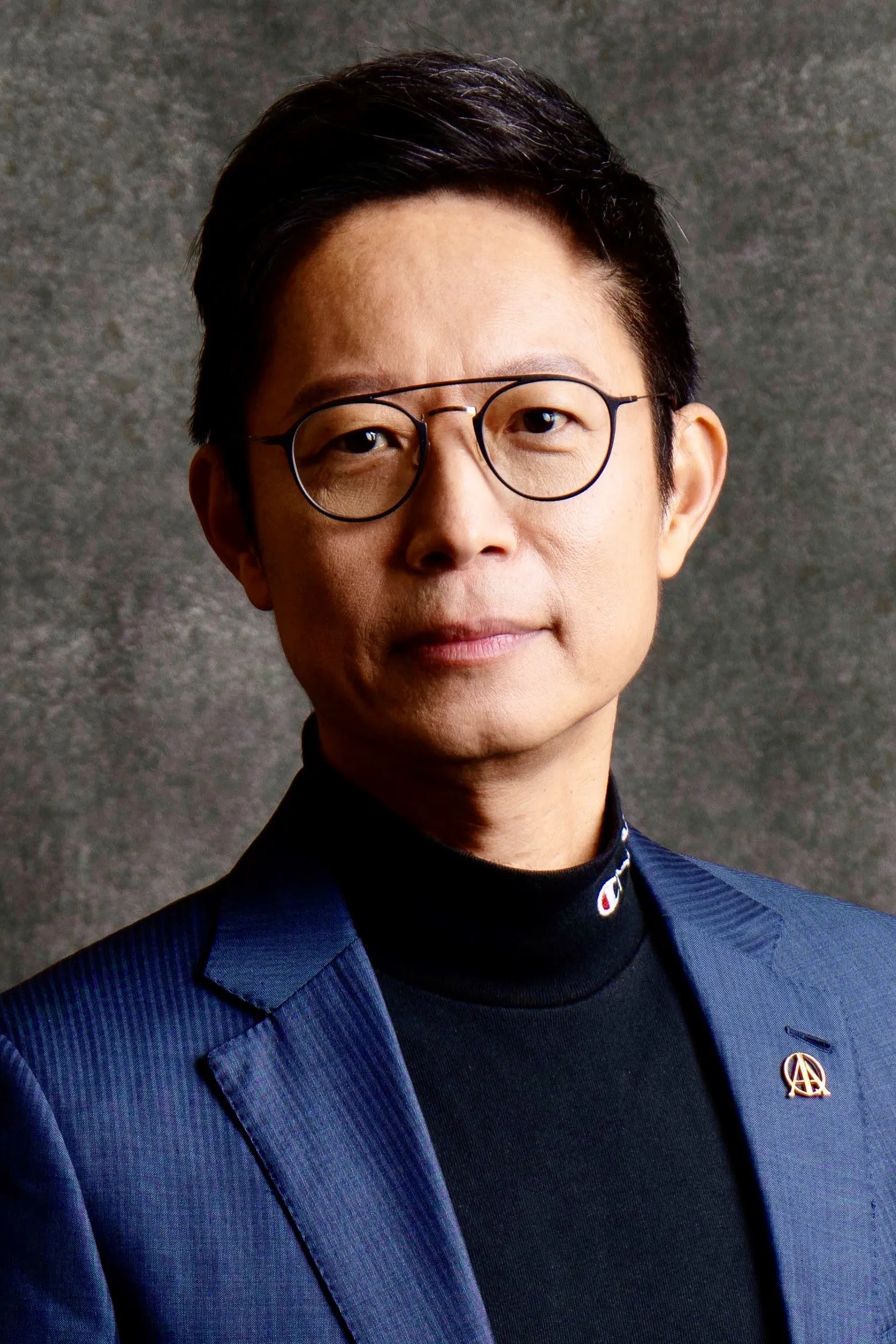
Fugee Tsung (Hong Kong University of Science and Technology)
Abstract
Despite rapid advances in generative AI, many industrial AI pilots fail to deliver meaningful business value. This talk explores how organizations can bridge this gap by moving from industrial automation to decision intelligence. Drawing on research from HKUST's Quality Lab and Triple-I Institute, it examines applications and limitations of anomaly detection, multimodal analytics, and physics-informed models in complex, safety-critical environments. Attendees will learn how to ground AI in industrial realities, establish effective safety and governance guardrails, and turn innovation into high-value operational transformation.
Biography
Prof. Fugee Tsung is Chair Professor of Industrial Engineering and Decision Analytics at HKUST, Director of the Quality and Data Analytics Lab (QLab), Co-Director of the Industrial Informatics and Intelligence Institute (Triple-i), and Associate Director of the HKUST-HKPC Joint Research Lab for Industrial AI and Robotics. A globally recognized leader in quality engineering, industrial analytics, and industrial intelligence, he is listed among the Stanford-Elsevier top 2% most influential scientists worldwide. He is an Academician of IAQ, Fellow of ASA, ASQ, IISE, APIEMS, and HKIE, and an elected member of ISI. His honors include the 2025 ASQ Shewhart Medal and the 2025 IISE George L. Smith International Award. He has served as Editor-in-Chief of the Journal of Quality Technology and held major leadership roles at HKUST and in international professional societies. His research focuses on quality analytics, statistical process control, industrial AI, and data-driven decision analytics, with 200+ refereed journal publications and work appearing in leading journals and top AI conferences.
Incremental or Transformative Platformization? Supply Chain Resilience in the Digital Era
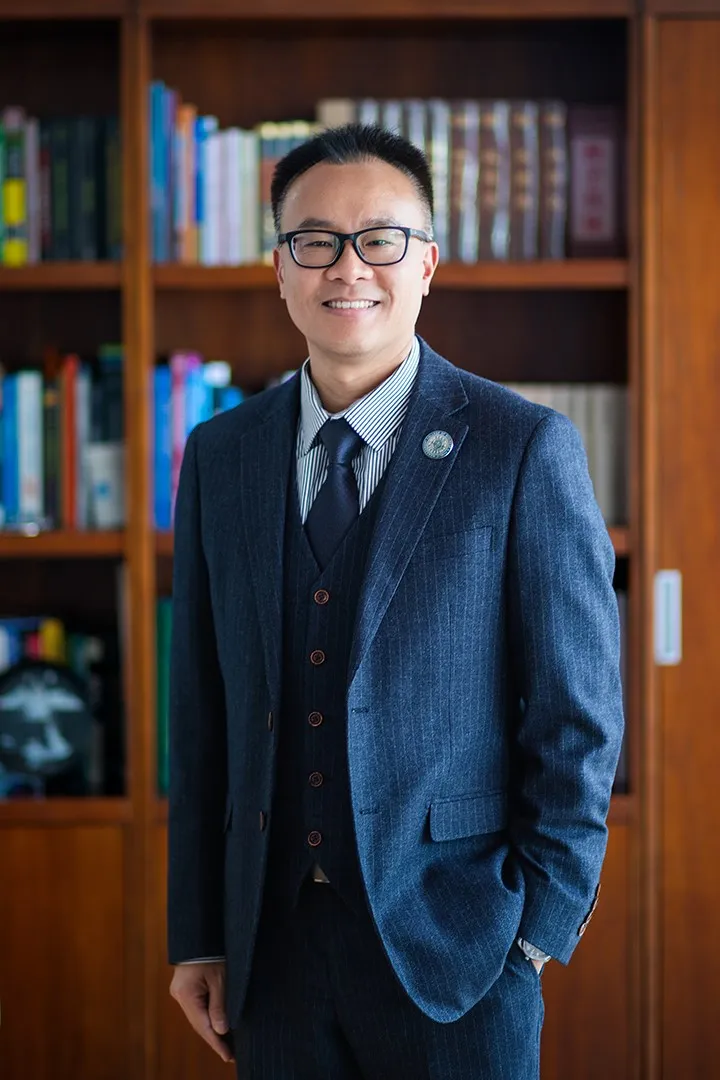
Hing Kai Chan (Wenzhou-Kean University)
Abstract
Based on various research studies conducted by the presenter, this work attempts to theorize why supply chain platformization produces heterogeneous resilience outcomes and when it remains incremental versus becomes transformative. This work develops a mechanism pyramid and a gate-based contingency matrix to explain how digital platforms enable (or undermine) supply chain resilience. Platformization builds resilience through a platform triad: interoperability, data sovereignty, and executable governance, which enables trusted visibility, shared sensemaking and alignment, and ultimately closed-loop orchestration and learning. Outcomes hinge on two gates: ecosystem activation/critical mass (Gate 1) and the fit between information-processing requirements and capacities (Gate 2). Combining platformization depth and fit yields four scenarios—pilot trap, incremental gains, rigidity and backlash, and transformative resilience—and motivates a focused research agenda on scaling collaboration, crisis governance failures, and embedding closed-loop learning. This study offers a mechanism-based vocabulary and research agenda that clarifies boundary conditions and links platform design choices to resilience mechanisms and outcomes.
Biography
Professor Hing Kai Chan is the Dean and Professor of the College of Business and Public Management, Wenzhou-Kean University. He obtained his PhD from the University of Hong Kong. His recent research interests are in digital supply chain, smart manufacturing, and sustainable operations. Professor Chan’s publications appear in Production and Operations Management, European Journal of Operational Research, International Journal of Production Economics, among others. He has been the co-editor of Industrial Management & Data Systems since 2014 and the International Journal of Production Economics since 2025. He has also been an Associate Editor of Transportation Research Part E: Logistics and Transportation Review since 2018. Professor Chan also serves as an Editorial Board Member (or similar) for several journals, including the International Journal of Operations and Production Management. He has (co-)edited 20 special issues for reputable international journals.
Sustainable Maritime Logistics: Blue Ocean for Researchers
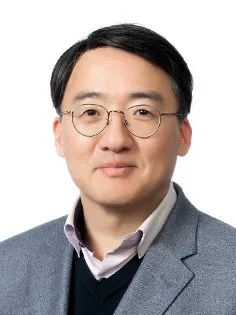
Ilkyeong Moon (Seoul National University)
Abstract
Maritime logistics is entering a period of profound transformation driven by environmental regulations, energy transition, and growing uncertainty in global supply chains. As sustainability becomes a central requirement rather than an optional objective, maritime decision-making must balance economic efficiency, environmental responsibility, and operational resilience. Traditional optimization approaches have contributed significantly to improving maritime operations, but emerging challenges increasingly require methods that can adapt to dynamic, uncertain, and data-rich environments. Recent advances in artificial intelligence, reinforcement learning, and optimization provide new opportunities to redesign decision-making frameworks for sustainable maritime logistics. These methodologies make it possible to capture complex interactions among regulatory policies, operational constraints, energy systems, and long-term supply risks. They also enable decision-makers to move beyond static planning and develop adaptive strategies that respond to changing conditions over time. The integration of AI-based learning and optimization-based modeling is particularly important for addressing problems where uncertainty, sequential decisions, and large-scale system complexity coexist. Ultimately, sustainable maritime logistics will depend on scalable, resilient, and deployable decision-making systems that can support the industry’s transition toward a more environmentally responsible future.
Biography
Professor Moon is a Professor of Industrial Engineering at Seoul National University, Korea. He received both his B.S. and M.S. degrees from Seoul National University and earned his Ph.D. from Columbia University, USA. Professor Moon’s research interests include supply chain management, maritime logistics, and inventory management. He is a leading scholar in these fields and has published more than 200 papers in prestigious international journals. According to Google Scholar, his work has received more than 11,000 citations, and his h-index is 57. He has been recognized in Stanford University’s “World’s Top 2% Scientists” list in both the career-long and single-year impact categories. His international reputation is further reflected in ScholarGPS rankings, which place him among the top 0.25% of scholars worldwide in Industrial Engineering, recognizing him as a “Highly Ranked Scholar.”
Professor Moon has served as Co-Editor-in-Chief of the European Journal of Industrial Engineering, an SCI-indexed journal. He was President of the Korean Institute of Industrial Engineers (KIIE) from 2019 to 2020. In 2023, he was elected a regular member of the Korean Academy of Science and Technology, the most prestigious scientific and engineering society in Korea. He is also a Fellow of the International Foundation for Production Research (IFPR), the organization that publishes the International Journal of Production Research. Notably, the IFPR has only 19 fellows worldwide. In addition, he has been a Fellow of the Asia-Pacific Industrial Engineering and Management Systems (APIEMS) since 2015.